

Authors: Ren Siqi, Ni Huaiyuan, Dai Fanjing, Lin Yutong, Li Hanhan (in no particular order)
Kashgar is a traditional agricultural region with a large rural population. In 2023, the region’s economy showed a steady growth. According to the unified calculations of the autonomous region, Kashgar’s Gross Domestic Product (GDP) reached ¥150.835 billion, representing a year-on-year increase of 6.4%. The primary sector’s added value was ¥49.314 billion, up 6.5%; the secondary sector contributed ¥29.934 billion, up 7.6%; and the tertiary sector generated ¥71.587 billion, up 5.8%.
Agriculture plays a vital and irreplaceable role in Kashgar’s economic development. Therefore, boosting local farmers’ incomes is crucial for furthering economic development, achieving social stability, and enhancing overall welfare. To achieve this, local organizations have implemented various initiatives aimed at supporting agricultural development, increasing job opportunities, and promoting new entrepreneurial ventures, thereby helping rural minorities increase their income.
Agricultural Support – Promoting Income Growth
In recent years, the agricultural development in Kashgar has received significant attention and support from both the government and local organizations. To enhance the productivity of farmers, the government has implemented several measures. For example, in the fields of crop farming and horticulture, the government provides wheat farmers with a subsidy of ¥230 per mu and offers free pesticide supplies every quarter. These supportive policies have been well-received by the local farmers, effectively reducing production costs and increasing economic returns.
The family of Aishe Muguli in Boshkeranmu Township (commonly referred to as “Bo Township”) mainly relies on fruit farming, including pomegranates, grapes, and red dates, to sustain their livelihood, with an annual income of ¥60,000. The government’s provision of pesticides saved them ¥500 in pest control expenses. Additionally, cooperatives provide farmers with convenient channels for selling their fruits, addressing potential challenges in marketing their products after harvest, and ensuring more stable income for the farmers.
In the livestock sector, the “Sheep Baby” project, managed by the Shenzhen-Kashgar Social Work Station (referred to as “Shen-Kashgar Social Work Station”), has been continuously supporting disadvantaged families to improve their economic conditions.
At the project’s inception, the Shen-Kashgar Social Work Station partnered with 80 impoverished households, giving each household five sheep, with the requirement that within two years, the offspring from the sheep be passed on to another household in need. After ten years of effort, 1,661 families in rural Kashgar have benefited from this project, increasing their income through sheep farming.
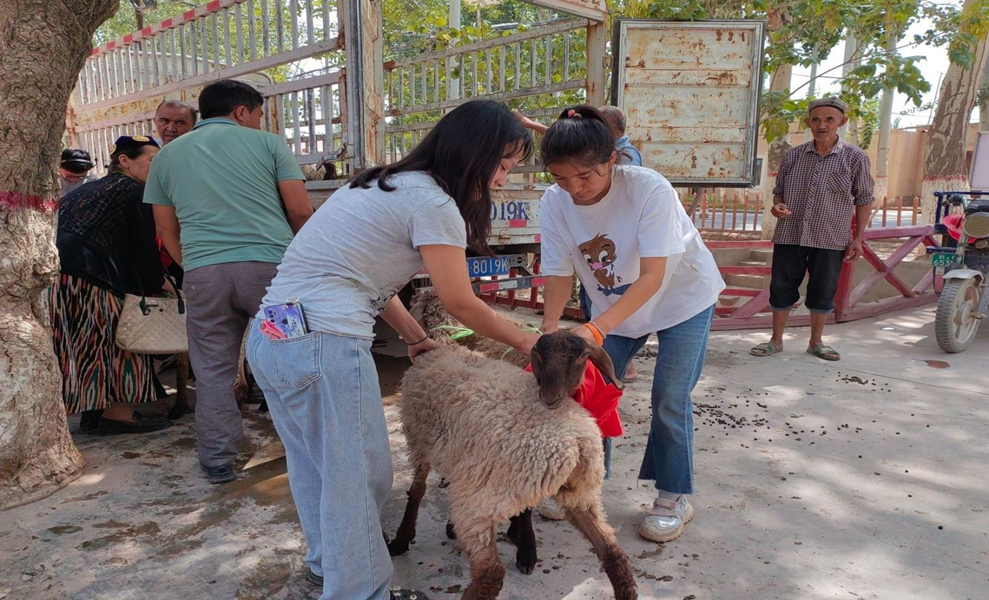
In addition to distributing livestock and stabilizing livelihoods, Xiaotu, a social worker at the Shen-Kashgar Social Work Station, mentioned that they also established a medicinal bath facility in Yingwustan Township. This facility helps farmers cool down and deworm their sheep during the summer months. They also provide training on selecting and purchasing sheep. These measures not only improve farmers’ livestock success rates but also promote the scaling and commercialization of animal husbandry. Additionally, the social workers offer fattening training, enabling farmers to increase a sheep’s weight by 20 kilograms in 40 days with specialized guidance—a process that traditionally could take years. This significantly reduces farming costs and enhances economic returns.
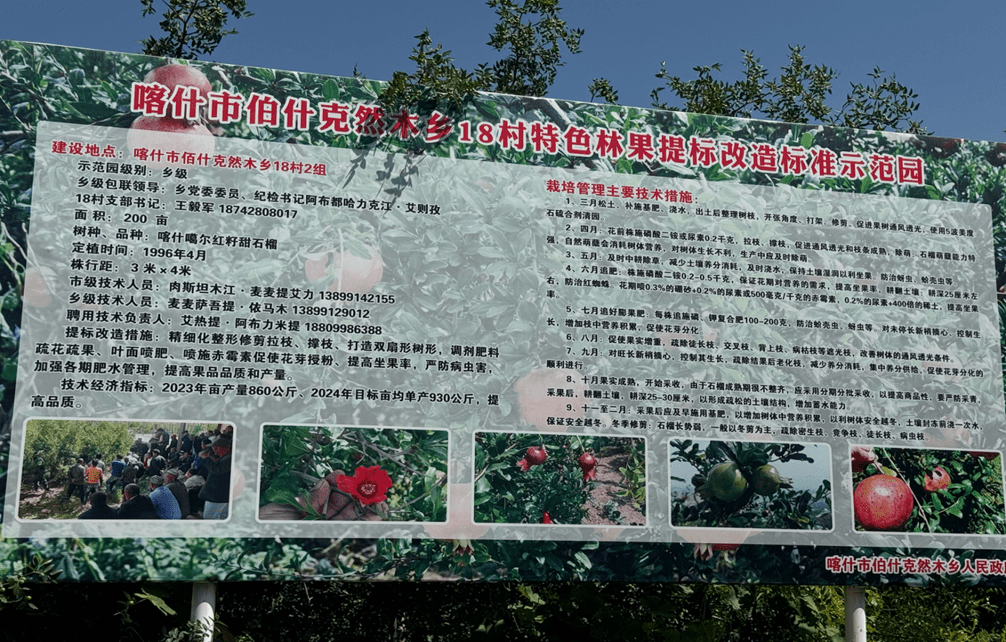
Moreover, the Bo Township government offers professional training for forest rangers. Through 15 days of systematic teaching, farmers learn pesticide mixing techniques, further improving their ability to manage orchards. Bo Township’s the eighteenth village has become a renowned fruit-producing region thanks to innovations in pomegranate cultivation techniques. Su, a social worker at the Shen-Kashgar Social Work Station, stated, “modern agricultural technologies are gradually being introduced into Kashgar’s orchards, and the variety of fruits is continuously expanding.”
The application of new technologies has also contributed to agricultural development. For instance, in the eighteenth village of Bo Township, the government uses drones each quarter to spray pesticides over large areas of farmland, significantly increasing efficiency and reducing farmers’ labor intensity. Additionally, the government provides high-quality wheat and corn seeds, ensuring high yields and further boosting household income.
Increasing Employment Opportunities for Farmers – Promoting Jobs
The government has implemented various measures to promote employment among ethnic minorities in rural Kashgar. To support Mandarin language learning, village committees have established night schools, providing villagers with opportunities to study the national common language (Mandarin). These night school courses not only help improve their language skills but also enhance the employment competitiveness of local minorities. In addition to the government’s night classes, the social work stations in the Shenzhen-Kashgar Industrial Park actively participate by rotating through factories and providing Mandarin education to employees. These efforts help rural minorities become more proficient in their jobs and also prepare them for employment opportunities in other sectors.
The Kashgar rural government pays special attention to women in rural families, offering significant support to help them find employment. Opportunities include jobs at the Shenzhen-Kashgar Industrial Park or local satellite factories. This support has encouraged rural families to step out and participate actively in the workforce, with some women earning over ¥3,000 per month.
The manager of a garment factory in the Shenzhen-Kashgar Industrial Park, Director Zhang, remarked, “I am determined to empower them.” This strong sense of social responsibility not only improves the economic conditions of female workers but also helps them realize their own value, bringing positive changes to their families.
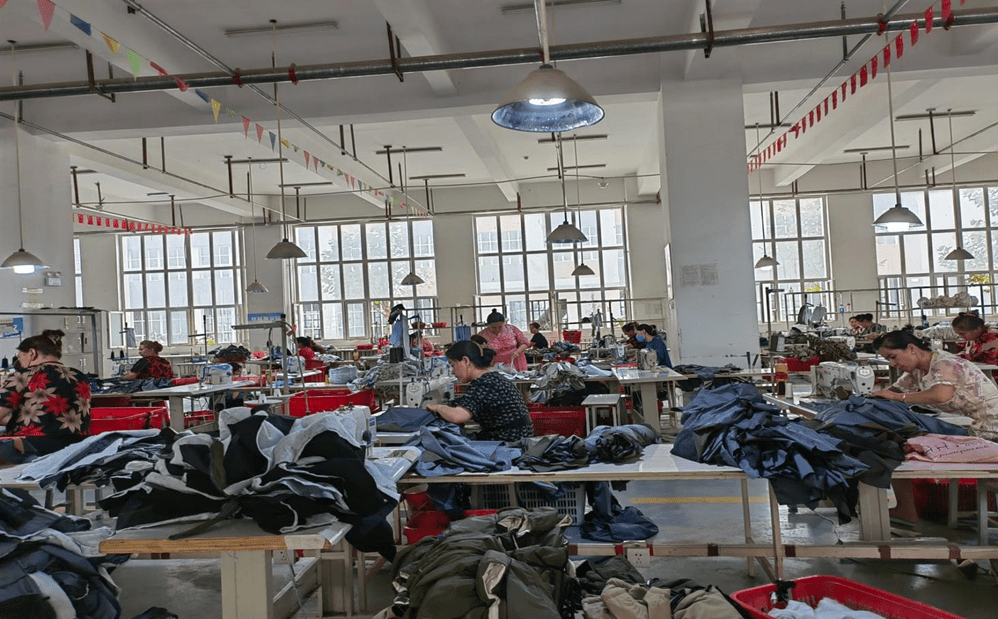
As employees’ skills improve, along with their self-awareness and social progress, more diverse employment opportunities have become available. Some workers now consider their career development and choose job positions that better suit their skills and aspirations. This trend reflects the growing diversity and potential in the career development of ethnic minorities in rural Kashgar.
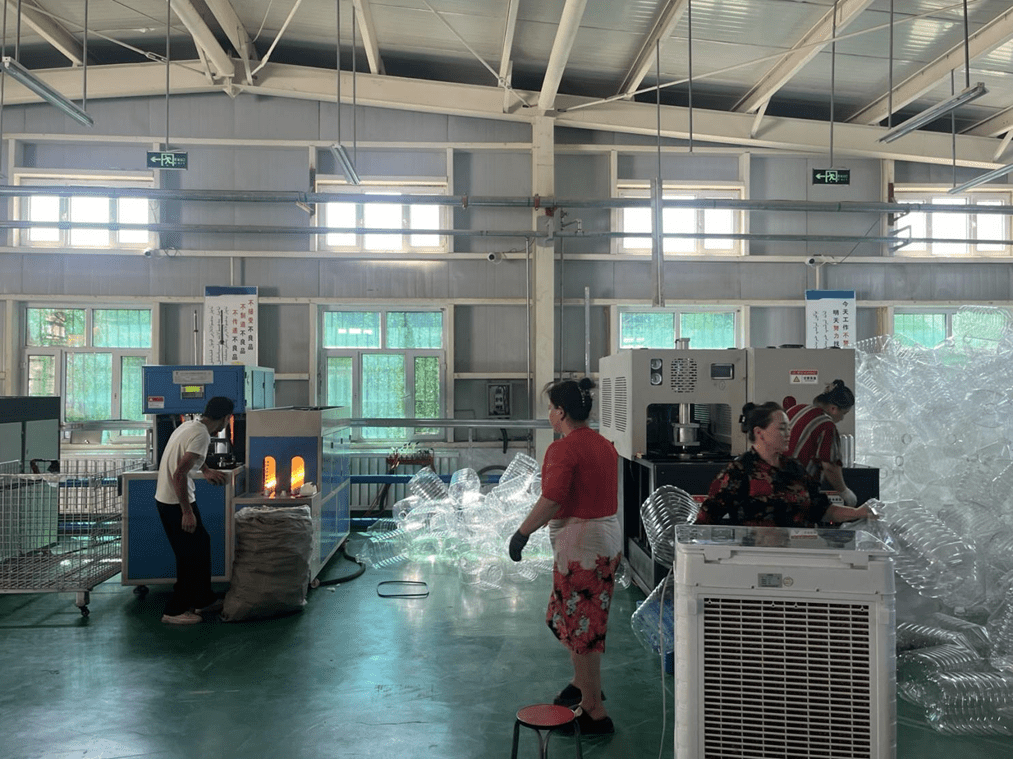
Employment in satellite factories is another effective way to promote job opportunities for ethnic minorities in rural Kashgar. For example, in the eighteenth village of Boshkeranmu Township, an entrepreneur from Shenzhen, Ms. Bai, established a 400-square-meter food packaging factory. This satellite factory exclusively employs local villagers, providing them with job opportunities. Although the factory currently has a limited number of employees, Ms. Bai plans to expand the workforce as the market grows, increasing production capacity and helping more local villagers improve their income. In the factory, regular workers earn ¥1,800 per month, while skilled workers can earn up to ¥5,000 per month, providing a stable income for the local community.
Rural Revitalization – Promoting New Entrepreneurship
Under the broader initiative of rural revitalization, many farmers in Kashgar have begun transitioning from traditional work models to explore diverse family-based entrepreneurship opportunities, aiming to improve household income and quality of life. Local farmers are no longer limited to conventional agricultural production and have started venturing into various new entrepreneurial models, such as farm stays and tailoring shops.
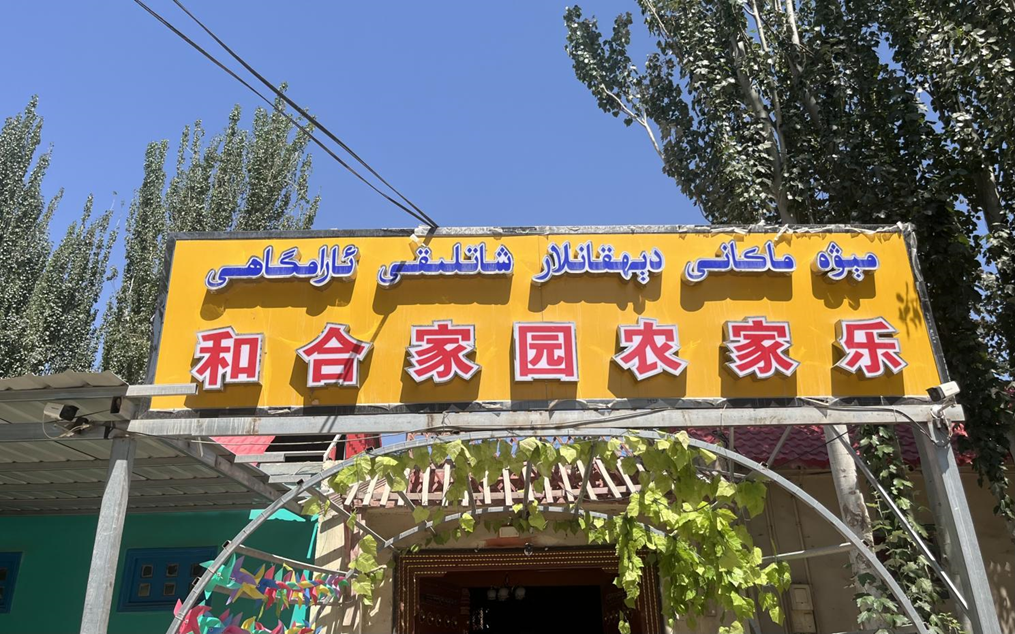
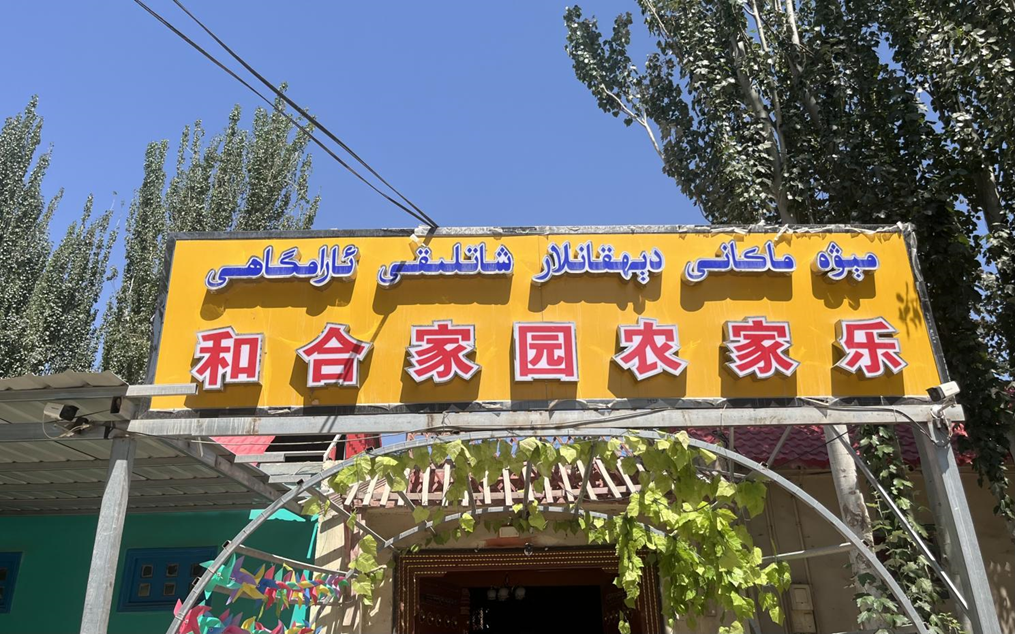
Last year, Ayitula and her husband, residents of the eighteenth village in Bo Township, transformed their home into a unique farm stay—Hehe Family Farmhouse—using a loan. The farm stay, operated by the couple, primarily offers dining services and wedding venues for locals. To support their entrepreneurial venture, the Shenzhen-Kashgar Social Work Station provided ¥10,000 in funding for construction. Thanks to the success of their business, Ayitula’s monthly net income now exceeds ¥10,000 and can even reach ¥20,000 during peak wedding season. In contrast, their previous main source of income was her husband’s taxi driving, which brought in only ¥3,000 per month, leading to a significant improvement in their household income.
Personal entrepreneurship has also seen development in rural Kashgar. According to villagers, some women have opened small tailoring shops, producing and selling clothing, hats, and traditional ethnic attire. Meanwhile, other villagers have started small businesses such as bakeries, repair shops, and stalls in Kashgar’s ancient city tourist spots, expanding their income sources through these ventures.
Local organizations have played a key role in supporting these entrepreneurial projects. The Shenzhen-Kashgar Social Work Station not only provides skills training to local villagers but also helps promising entrepreneurs access larger markets. As Su, a social worker at the station, explained, “We are just guides, pointing the way.” Their goal is to help emerging businesses scale up, create more jobs, and introduce their products and services to more prosperous inland markets.
With the support of both the government and broader society, families and individual entrepreneurs in rural Kashgar are becoming central to the rural revitalization strategy. Not only have they improved their living standards, but they have also injected new vitality into the local economy, becoming key drivers of rural revitalization.
Conclusion
Local organizations have made significant progress in raising the income of ethnic minorities in rural Kashgar. Government agricultural subsidies and technical support have greatly improved farmers’ productivity. Projects like the “Sheep Baby” initiative and fattening training provided by the Shenzhen-Kashgar Social Work Station have helped struggling families generate additional income each year. Regarding rural employment, Mandarin training provided by the government and the Shenzhen-Kashgar Industrial Park has increased opportunities for rural minorities in various fields. Through the combined support of the government, social organizations, families, and individuals, rural minorities in Kashgar are building more prosperous and fulfilling lives for themselves and their families. Their efforts, coupled with society’s support, are undoubtedly driving them toward a brighter future.
References:
1. Kashgar Region. Baidu Baike. (n.d.):
[https://baike.baidu.com/item/%E5%96%80%E4%BB%80%E5%9C%B0%E5%8C%BA/11029812?fr=ge_ala](https://baike.baidu.com/item/%E5%96%80%E4%BB%80%E5%9C%B0%E5%8C%BA/11029812?fr=ge_ala)
 chinaglobaldialogue.com