

Author: Lixiang Chen, Siyuan Chao, Ruoqin Hao, Nuoyan Shi (in order of initials)
The United Nations Population Fund (UNFPA) defines sexuality education as “education aims to develop and strengthen the ability of children and young people to make conscious, satisfying, healthy and respectful choices regarding relationships, sexuality, and emotional and physical health.” Data show that long-term sexuality education programs are effective in reducing unintended pregnancies, abortions, sexually transmitted infections (STIs), and HIV infections. Thus, effective sexuality education enables adolescents to act more wisely and calmly for themselves and others when faced with unintended accidents, such as sexual violence, sexual harassment, unwanted pregnancies, and sexually transmitted infections (STIs).
In the Kashgar region, many adolescents have not yet received comprehensive and effective sexuality education,so they have a relatively poor understanding of sex-related knowledge.
I. Current Situation
I. Current Situation
In the past, many adults in rural areas of Kashgar did not receive sexuality education when they were teenagers. A 45-year-old woman recalled when she told her mother about her menarche, her mother thought having menarche before marriage was abnormal.
Along with the social development, more and more people are aware of the importance of sexuality education. Now, local schools have introduced sexuality education for teenagers. Some schools hold a lecture on sexuality education once a year or a semester for the whole grade. However, students may not be able to concentrate on large-scale lectures. As a result, they cannot effectively learn the knowledge.
On the family side, on the one hand, some families have not received complete sexuality education in the process of growing up, so they cannot teach relevant knowledge to their children. Besides, due to the conservative traditional culture, most parents do not take the initiative to discuss these issues with their children.
A college student in a rural area of Kashgar mentioned that her mother had never told her about sex, and all knowledge she has learned from the Internet or from friends.
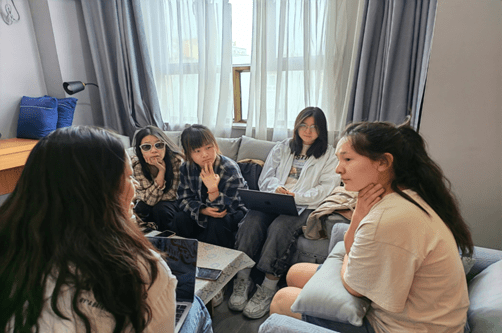
Some children’s essential knowledge of sex is known after menarche through the female elders in the family or from their elder sisters. However, these female family members will generally only inform the precautions of menstruation and the use of sanitary napkins, but will not explain the physiological reasons for menstruation in detail.
A 57-year-old woman in a rural area of Kashgar mentioned that because she had late menarche until she got married, she thought her children would not have menstruation early so she did not teach them. It was not until the children had menstruation that she told them that they would have body aches and could not eat ice, or spicy food. As for why a girl of a certain age would come to menstruation, she did not understand and also did not tell her child.
On the other hand, some parents have incorrect guidance. Social workers who conduct sexuality education programs share that some parents would tell their children not to let others notice the early puberty so they should buy small-size underwear and not make friends with doctors. These wrong ideas will have a negative impact on children’s growth.
As a result, the understanding of sex for many children tends to be vague. They will be overwhelmed during menarche. A college student from rural Kashgar recalled that she thought she was sick while experiencing menarche. Another girl recalled: “ The first time I got my period, I was scared. ”
Some teenagers will handle it improperly during their menstrual period. According to a sophomore girl from a rural area in Kashgar, she had been eating cold food to aggravate her menstrual cramps, and she needed to go to the hospital for an infusion to relieve the pain.
II. Measures
Kashgar‘s local social organization is dedicated to the development and promotion of sexuality education.
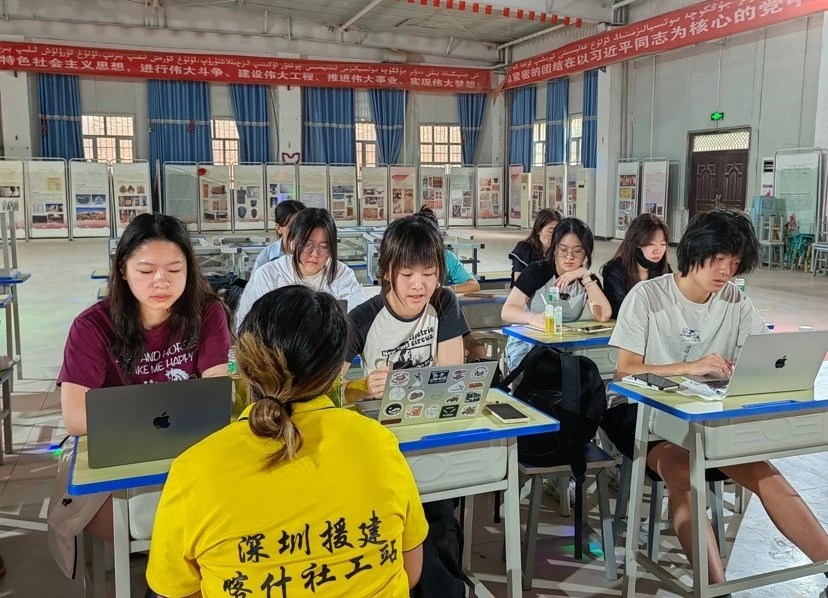
Shenka Social Work Station is a local professional social work service agency in southern Xinjiang. In recent years, the Civil Affairs Bureau and other institutions have strongly supported sexuality education programs launched by Shenka Social Work Station.
In the beginning, social workers in charge of the project taught parents directly about sexual knowledge. But it didn’t work very well, because the parents didn’t know how to start this topic with their children. The social worker Ayitila, reflected, “The parents are willing to listen, but they don’t want to talk to their children. They think it’s too private to tell their children alone, “she said.
Later, social workers adjusted and stood in schools and communities to conduct sexuality education activities.
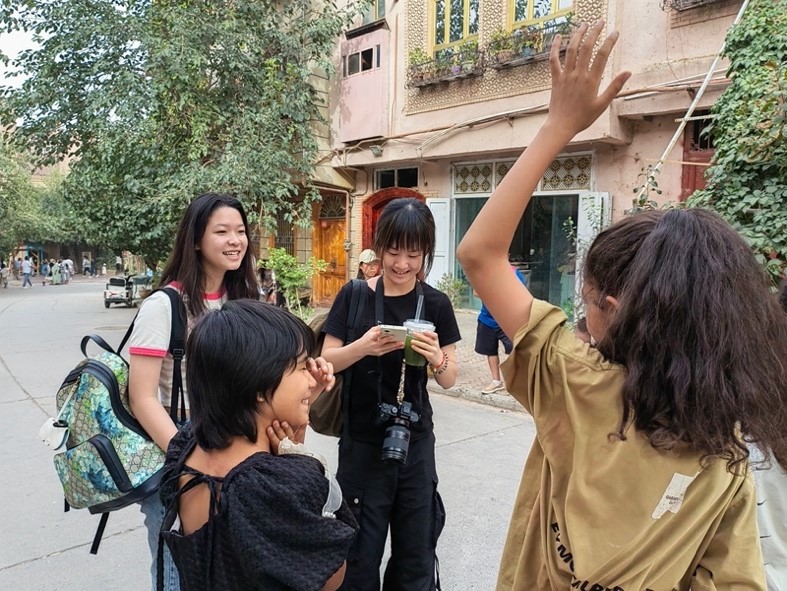
During the school term, the social worker will give lectures in the school. During the vacations, the social worker conducts activities in the community. Normally, the social worker makes an appointment with the community office. Then, the community will put out an announcement to recruit the children who are interested.
Each of the activities has its own theme to help teenagers gain a more comprehensive understanding of sex and physical changes after entering puberty. First, the social workers will introduce the reproductive organs of boys and girls, especially the ovaries and eggs. Then they will show teenagers the physical and emotional changes during puberty, and how to maintain personal hygiene, as well as the harm that may be caused to the body if not maintained.
Since the children do not have the relevant experience and knowledge, the social workers will teach them how to choose the proper underwear and the importance of washing underwear separately from other clothes.
The course will then cover how teenagers should protect themselves, such as which private parts should not be touched by others.
As more and more teenagers use mobile phones, there is a great risk that they will be exposed to pornographic information, which they will not be able to recognize. Ayitila believes that it is necessary to teach them how to recognize. Social workers tell teenagers what is sexual harassment and sexual assault, and how to prevent it happen. The activity also makes them aware of how to deal with it and protect themselves afterward if they are unlucky to encounter such an incident.
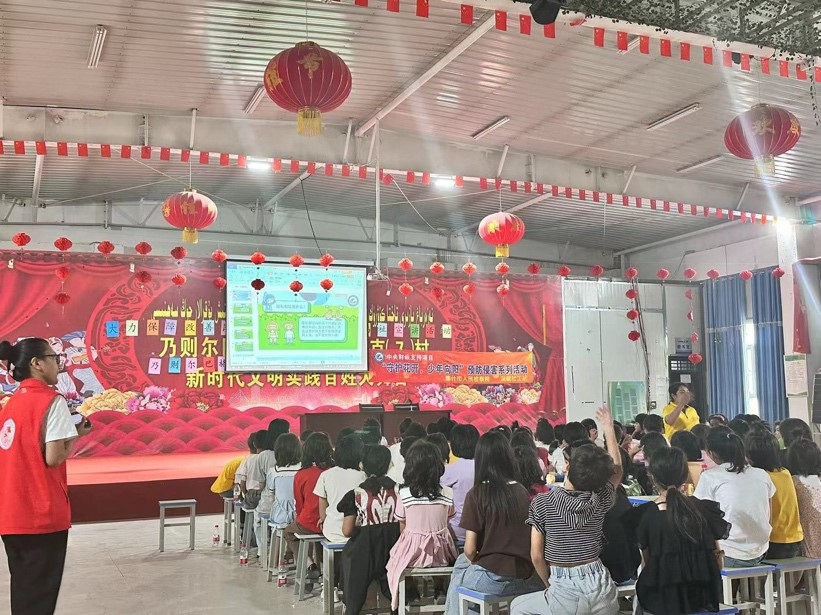
In order to relieve embarrassed teenagers, there are small games and experiments in the activity. During the activities, Ayitila would distribute sanitary napkins to everyone, provide each person with a pad, and simulate some real scenes of menstruation on the spot, so that the teenagers were more clearly aware of the situation, and know how to deal with it. This type of teaching is more effective. “Although I will spend more time and have more workload, I can see the results are particularly outstanding.”
In addition to teaching, the social work station also distributes supplies including underwear, sanitary napkins, laundry tubs, etc. to teenagers from needy families to ensure their hygiene.
III. Effectiveness
Many teenagers have gained correct and effective sexual knowledge after participating in the activities, and the changes have been significant.
According to feedback from social workers, some teenagers used to use paper towels instead of regular sanitary napkins, and some teenagers used foot-washing basins to wash their underwear. Almost all teenagers realize what the right thing to do is after participating in the activity.

In addition, the activity provides a platform for many teenagers to talk and ask for help. Some teenagers will spontaneously add the contact number of social workers, and ask social workers who have abundant knowledge when they meet problems.
Teenagers who participate in the activities not only learn but also pass on what they have learned to those around them. A girl who participated in the activities two years later found that her elder sister had frequent periods. She immediately consulted a social worker. The social worker said her sister was not in early puberty, such a frequency of menstruation is abnormal. However, the girl did not know how to ask her mother to take her to see a doctor. After repeated communication between social workers and her mother, she was finally agree to bring her daughter to see a doctor.
The acceptance of sexuality education is gradually increasing throughout society. Parents, for their part, have not been fully educated themselves. They gradually discovered that the activity provides their children with comprehensive and effective information about sex, so they are very supportive.
“What you taught was never told to us when we were children. I hope you can tell it to the children.” Some parents reported feedback to social workers after the activity.
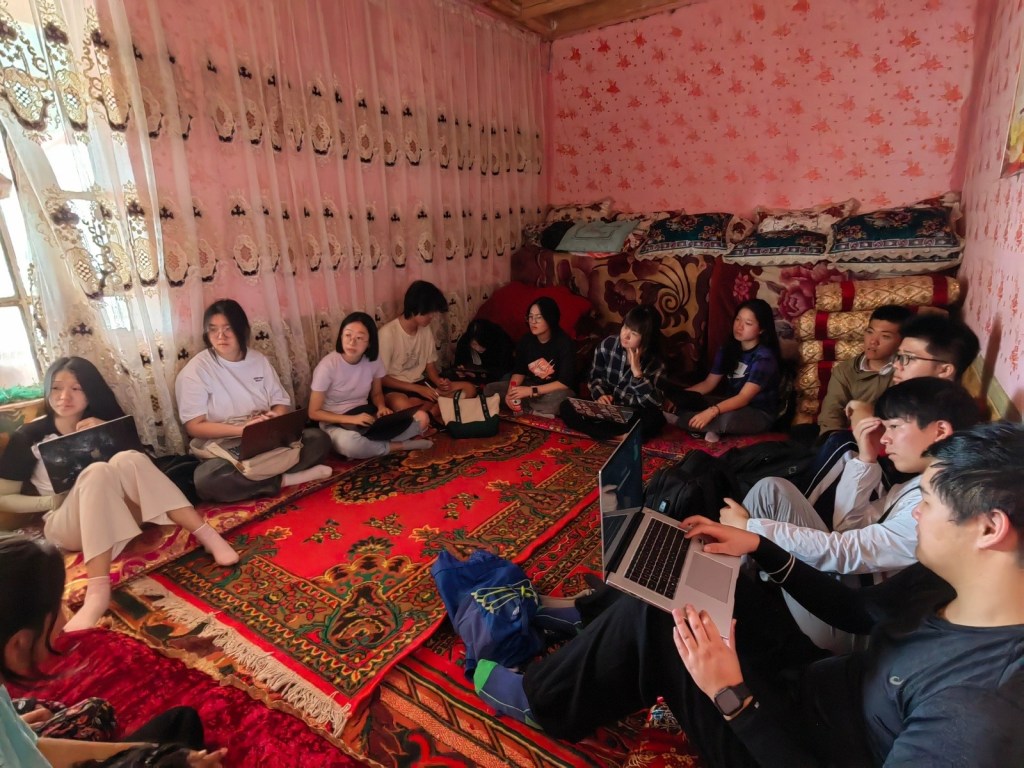
In the school, the principal and the secretary at start feel that the local health situation was relatively poor, and they should focus on health and hygiene education. However, under the promotion of perfect and effective activities, the teacher gradually discovered changes in the teenagers.
Driven by positive changes, the principal began to invite social workers to the school to carry out more sexual lectures. The effect of long-term sexuality education programs in schools is also very significant. Now, a bag of sanitary napkins will be prepared in the drawer of each class head teacher, allowing teenagers to get help when they start menstruating.
In addition, the school secretary will voluntarily recommend the sexuality education programs to other schools. From a pilot program in one or two schools, the program has gradually been promoted to many schools.
At the larger community level, they are active in sexuality education activities. Ayitila shared that when she went to a community to carry out activities a few days ago, the community leader recognized the project very much. The community leader said: “Can you go to our place to carry out another one?”, which shows the popularity of the activity.
IV. Future expectations
Despite this success, there are still many teenagers who are not well-educated. More funds and manpower are needed to reach more teenagers, and it also requires the joint efforts of all sectors of society. “Children are one group that can be grateful. They have bad intentions. So I want to help more children.” Ayitila said expectantly.
Reference:
 chinaglobaldialogue.com