Canada needs to cut carbon, not try to capture it

Jason MacLean, University of New Brunswick When the federal government released the budget in April 2021, it proposed creating a new tax credit for private firms that make investments in carbon capture, utilization and sequestration projects. But in January, shortly after the consultation period closed, more than 400 Canadian climate scientists, academics and energy system modellers urged the government to cancel its plan. The letter … Continue reading Canada needs to cut carbon, not try to capture it

Living peacefully with coyotes means respecting their boundaries

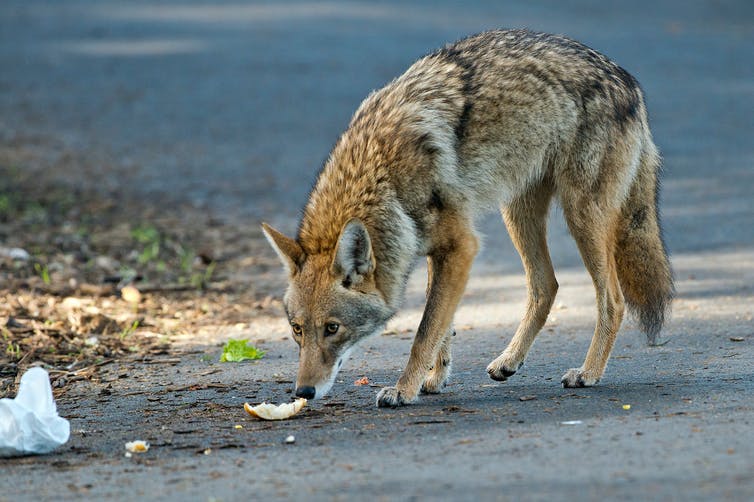
Shelley Marie Alexander, University of Calgary On average, three people per year are “attacked” (that means bitten or scratched) by coyotes across Canada. In comparison, an average of 180 Canadians per year are reportedly struck by lightning. Critically, 100 per cent of incidents involving coyotes are linked to human feeding. I have studied coyotes and other wild canids for over 30 years. Co-existence with coyotes … Continue reading Living peacefully with coyotes means respecting their boundaries

How to teach children about climate change, inspire hope and take action to change the future

Children need information that both acknowledges the troubling realities we’re facing and that also equips them to take action. (Roy/Flickr), CC BY-NC Maya K. Gislason, Simon Fraser University and Angel M. Kennedy, Simon Fraser University https://narrations.ad-auris.com/widget/the-conversation-canada/how-to-teach-children-about-climate-change–inspire-hope-and-take-action-to-change-the-future Children and youth know that climate change is altering lives, environmental patterns and futures. Human-caused climate change is altering the intensity of the likelihood of extreme weather, and has contributed to … Continue reading How to teach children about climate change, inspire hope and take action to change the future

Insurance isn’t enough: Governments need to do better on natural disaster resilience

Anne E. Kleffner, University of Calgary and Mary Kelly, Wilfrid Laurier University https://narrations.ad-auris.com/widget/the-conversation-canada/insurance-isn-t-enough–governments-need-to-do-better-on-natural-disaster-resilience The massive floods in British Columbia in November 2021 demonstrated the devastation that natural disasters can cause in Canada. Prior to 2010, it was rare for annual insured losses from natural disasters in Canada to exceed $1 billion, but now insured losses of $3 billion are not uncommon. Canada is expected to … Continue reading Insurance isn’t enough: Governments need to do better on natural disaster resilience

The Paris Agreement is working as intended, but we’ve still got a long way to go

Matthew Hoffmann, University of Toronto https://narrations.ad-auris.com/widget/the-conversation-canada/the-paris-agreement-is-working-as-intended–but-we-ve-still-got-a-long-way-to-go Well, this is beginning to feel old: 2021 was another year of climate catastrophes — just like the one before it. Yet another year of fires and floods, with more beckoning for 2022. And, like last year, there are desperate calls for 2022 to be a year of accelerated climate action. It has to be, in so many ways … Continue reading The Paris Agreement is working as intended, but we’ve still got a long way to go